Vol. XVIII · Free shipping $75+ · Read the collection
Feature · Product Review
glutathione increases in cancer cells

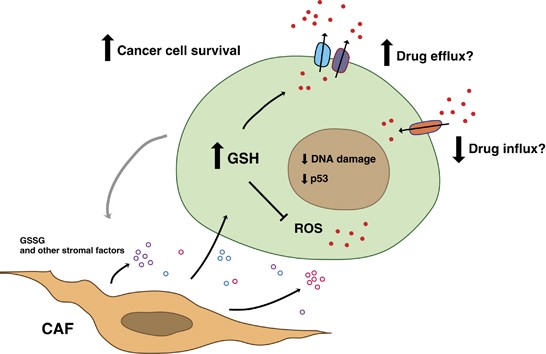
glutathione increases in cancer cells Human cancer-associated fibroblasts enhance levels and antagonize drug-induced prostate cell death Glutathione and Thioredoxin Antioxidant Pathways

Glutathione and Thioredoxin Antioxidant Pathways Synergize to Drive Cancer Initiation and Progression: Cancer Cell Glutathione metabolism in cancer progression and treatment resistance PMC Role of Glutathione in Cancer: From Mechanisms to Therapies Glutathione: Lights and Shadows in Cancer Patients PMC Unraveling the Potential Role of Glutathione in Multiple Forms of Cell Death in Cancer Therapy Lv 2019 Oxidative Medicine and Cellular Longevity Wiley Online Library

SKU: 40630499790 · From hgidocs.co

4.6
USD27.07 USD52.07

Pay in 4 interest-free payments of $6.77 Learn more

Shipping Estimate
USA
  • USA
  • CAN

Ships within 48 hours · Estimated delivery Jul 30 - Aug 4

Description

Somatic cells can be treated with gene replacements or gene fragments to express required proteins and whilst gene therapy was originally aimed at inherited disease, it is now capable of treating a number of acquired problems such as

glutathione increases in cancer cells Human cancer-associated fibroblasts enhance levels and antagonize drug-induced prostate cell death Glutathione and Thioredoxin Antioxidant Pathways

In the literature are described only two assays dedicated for N-Hcy-Lys determination, and only one of these helps to determine N-Hcy-Lys and low-molecular-mass thiols in plasma 21

glutathione increases in cancer cells Human cancer-associated fibroblasts enhance levels and antagonize drug-induced prostate cell death Glutathione and Thioredoxin Antioxidant Pathways

PMID 7768942

glutathione increases in cancer cells Human cancer-associated fibroblasts enhance levels and antagonize drug-induced prostate cell death Glutathione and Thioredoxin Antioxidant Pathways

(em) = 530 nm]

glutathione increases in cancer cells Human cancer-associated fibroblasts enhance levels and antagonize drug-induced prostate cell death Glutathione and Thioredoxin Antioxidant Pathways

The senescence-associated secretory phenotype (SASP) emerges as a central regulator, propagating chronic inflammatory states and metabolic dysfunction (403)

glutathione increases in cancer cells Human cancer-associated fibroblasts enhance levels and antagonize drug-induced prostate cell death Glutathione and Thioredoxin Antioxidant Pathways
Exchange/Return Notes
  • We offer a 30-day return/exchange service after receiving.
  • Final sale items are not eligible for returns or exchanges.
  • To process your return/exchange, please contact us at [email protected]
  • Please click here for more details>>> Return & Exchange Policy

You may also like

recommand products